Duty and obedience as moral evasion
The Narrow Road to the Deep NorthDuty and obedience as moral evasion is the novel’s account of how people turn chosen actions into obligations and thereby evade responsibility for their consequences. It is embodied most brutally by Major Nakamura, who orders a prisoner beaten while treating obedience to the Emperor and the railway as a higher good than the man’s suffering. The pattern extends beyond the camp: Dorrigo Evans yields to expectations in his private life, and postwar institutions preserve some names and judgments while leaving other victims unrecorded. Duty can name a real burden, but here it also becomes a refuge from choice.
The logic of obedience
Nakamura does not experience himself as a man who enjoys cruelty. As he listens to the beating, he is agitated, physically uncomfortable, and in need of shabu; he takes no pleasure in the prisoner’s pain. Instead, he uses his distress as evidence of his own goodness. He reasons that a good and gentle person would feel pained by suffering, and that this goodness is compatible with ordering punishment because he understands goodness as obedience, reverence, and painful duty. The reasoning does not prevent violence. It converts his discomfort into moral reassurance.
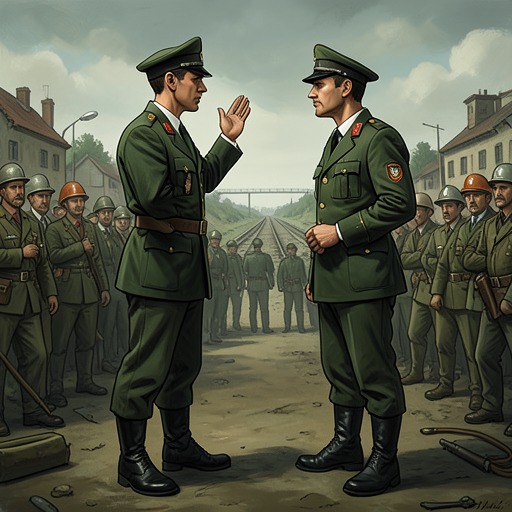
The immediate rationale is institutional as well as personal. The railway deadline has become more difficult, the prisoners have resisted, and the guards feel uneasy. Nakamura sees punishment as a means of restoring authority and reminding the prisoners of their assigned duty. The discovery of missing prisoners by Colonel Kota has also brought shame upon Nakamura and the men under his command. He therefore treats the punishment as a matter of honour rather than guilt. In his view, existence itself is conditional: one serves the Emperor and the railway, understood as the Emperor’s will, or has no reason to live or die. This logic makes the order appear compulsory while leaving Nakamura as the person who gives it.
Violence, forgetting, and the return to duty
The scene also implicates the men who witness the beating. Dorrigo sees three hundred prisoners watching three men destroy someone they know, without intervening. He recognizes that he is among them: he arrived too late, did too little, and feels that he has somehow assented to what is happening. For an instant, he apprehends violence as an enduring force that human institutions and beliefs cannot overcome. The insight does not hold. It vanishes, and Nakamura returns to more reassuring thoughts of duty, the Emperor, the nation, and the next day’s railway work.
That return is made literal through Nakamura’s forgetting. Within ten minutes he has forgotten the beating. An hour later, passing the parade ground, he realizes it is still in progress: the prisoner is naked, the guards’ uniforms are dark with rain, mud, and blood, and the man no longer resists. Nakamura would prefer that the punishment had stopped, but decides not to interfere. After taking three tablets of shabu, he goes to find Corporal Tomokawa to buy whisky. The sequence sets administrative obedience beside bodily fact: the order continues to injure a prisoner even as the officer who authorized it puts the scene out of mind and turns to his immediate needs.
Dorrigo’s private submission
The same structure appears in Dorrigo’s postwar life in a different register. When his reunion with Ella Lansbury leads those around them to assume they will marry, he is weary and unable to assert his resistance. Their engagement, made seven years earlier as war approached and Dorrigo was about to leave overseas, is treated as a promise that must now be completed. He feels angry and defiant at times, but gives himself over to the expectations of people he regards as more sober and sane than himself. Three weeks later, he marries Ella in an alcoholic haze, wearing a suit she chose.
Dorrigo’s inward estrangement from the marriage does not stop him from performing the role expected of him. At the reception he conceals his doubts and speaks of a love that has survived their long separation. The narrative then describes a lasting pattern: he yields to circumstance and expectation, eventually calling their weight duty. Guilt about his marriage and his failures as a husband and father drives him to pursue goodness in public life; public goodness and duty offer an escape from private responsibility. A month after the honeymoon, he sleeps with his wife’s friend. The episode does not equate his conduct with Nakamura’s violence, but it reveals a related evasion: the language of duty can conceal submission in one instance and become a convenient moral self-description in another.
War crimes and selective judgment
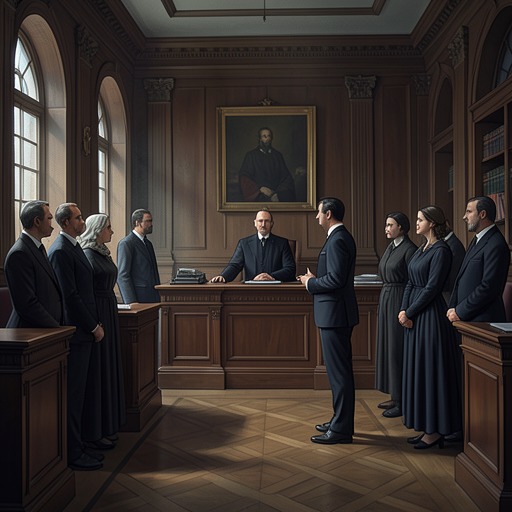
The postwar treatment of responsibility complicates any idea that a single verdict can settle the moral account. Choi Sang-min’s Australian military trial lasts two days, much of it conducted in English he barely understands. The court dismisses the charge that he participated in the murder of Frank Gardiner, citing the contradictory nature of the written testimony. It nevertheless convicts him of ordering the murder of Wat Cooney and of lesser offences involving mistreatment, including withholding food and medical supplies, and sentences him to death as a Class B war criminal.
Choi disputes the account of Cooney’s death: he says Cooney was no longer in the camp when the order was supposedly given. The records are confused and incomplete, however, and do not establish that claim. He also recalls that the prosecution relied on Colonel Kota’s interrogation testimony, which had helped convict Korean and Formosan guards, while Kota was later released without charge. Choi sees a hierarchy in which some men escape and lower-ranking men become scapegoats. The novel thus places individual orders and acts alongside uneven evidence, command responsibility, and unequal outcomes; invoking duty does not erase responsibility, but the process of assigning it can itself be selective.
Memorials and the limits of remembrance
The public commemoration of the war extends the problem from individual memory to national record. The Yasukuni Shrine in Tokyo displays locomotive C 5631, the engine that travelled the completed Death Railway on 25 October 1943, and houses the Book of Souls. The book lists more than two million people who died in service to the Emperor between 1867 and 1951; enshrinement is associated with absolution. Among the names are 1,068 men convicted of war crimes and executed after the Second World War, including men found guilty of mistreating prisoners on the railway.
Yet the locomotive’s plaque says nothing about the railway’s construction or its dead. The Allied prisoners were only part of the forced labour force; alongside them worked hundreds of thousands of Asian labourers, and estimates of deaths among these workers range widely. The novel stresses that no one knows the total, that their names have been forgotten, and that there is no book for their lost souls. This absence stands against the ordered lists and commemorative certainty of the shrine. In another postwar conversation, Kameya Sato recalls that Professor Ishiyama hanged himself in prison, while other researchers received death sentences that were commuted before they were released. Sato says the Americans want the matter forgotten, and so do the Japanese. Across punishment, pardon, and memorial, the novel shows duty’s afterlife: responsibility can be assigned unevenly, suffering left unnamed, and forgetting treated as a practical settlement rather than an answer.